
A Guide to Natural-Looking Double Eyelid Surgery
Read about A Guide to Natural-Looking Double Eyelid Surgery on Wonderful Plastic Surgery

For many, the thought of double eyelid surgery evokes images of drastic, "operated-on" looks. The modern reality, however, is far more nuanced. The true goal of this popular procedure is not to alter your identity but to subtly enhance your features, celebrating what makes you unique. Known as Asian Blepharoplasty, the focus has shifted from erasing heritage to empowering individuals with a refreshed, natural-looking gaze that feels authentically their own.
This comprehensive guide explores the different surgical techniques, the critical role of customization, and the path to achieving a result that is both beautiful and uniquely you.
Understanding Double Eyelid Surgery: Enhancement, Not Alteration
Double eyelid surgery, or Asian Blepharoplasty, is a deeply personal and transformative procedure. Its core purpose is to enhance natural eye aesthetics and function—not to alter or "Westernize" one's ethnic identity. We embrace and respect the rich diversity of beauty, ensuring every enhancement harmonizes with individual features.

This specialized cosmetic procedure creates or defines a crease in the upper eyelid, making the eyes appear brighter, larger, and more expressive. Surgeons meticulously tailor each procedure, considering the unique anatomy of Asian eyelids, including skin thickness, fat distribution, and muscle structure. The goal is always a natural-looking result that beautifully complements the patient’s existing facial features and preserves their cultural identity (Journal of Aesthetic Plastic Surgery, 2023).
Beyond aesthetics, this surgery can offer significant functional benefits by correcting conditions like droopy eyelids (ptosis), which can impair vision or create asymmetry. By addressing these concerns, the procedure improves both appearance and overall eye health.
Note: The term 'Asian Blepharoplasty' itself underscores a specialized approach designed specifically for unique Asian eyelid anatomy, reflecting a commitment to culturally sensitive and natural outcomes.
The goal of modern double eyelid surgery is to subtly enhance your natural eye shape and function, celebrating your unique heritage rather than altering it.
The Full Incision Technique: For a Permanent, Defined Crease
For individuals seeking a lasting and clearly defined double eyelid, the full incision technique stands out as a highly effective and trusted solution. Often considered the gold standard, this method allows for precise customization and delivers comprehensive, permanent results.
The technique involves a meticulous incision along the entire length of the desired eyelid crease. This allows the surgeon to directly access and sculpt the underlying structures by removing excess skin, fat, and muscle. This level of control is crucial for addressing unique anatomical features and achieving a natural-looking contour, making it especially beneficial for individuals with thicker skin or noticeable eyelid hooding. Research indicates that 60-70% of patients are better candidates for the full incision technique due to its versatility (Journal of Aesthetic Surgery, 2023).
The procedure focuses on creating a new, durable eyelid crease:
- Incision: A fine incision is made along the pre-marked, desired crease line.
- Tissue Adjustment: Excess skin, fat, and muscle are carefully removed to refine the eyelid's shape and reduce puffiness.
- Crease Formation: Sutures are used to mimic the natural fibrous attachments found in a double eyelid, creating a stable and permanent crease.
The primary advantage of this technique is its unmatched permanence and ability to correct complex issues like asymmetry and ptosis (droopy eyelids). While the term 'incision' might sound daunting, the resulting scar is incredibly fine and expertly concealed within the new eyelid crease, becoming virtually invisible once healed.
Recovery typically involves moderate bruising and swelling, which subsides within one to two weeks (Aesthetic Plastic Surgery, 2022). Although this is slightly longer than other techniques, the trade-off is a superior, permanent result.
The full incision technique is the definitive approach for creating a lasting, well-defined double eyelid, especially when comprehensive correction of excess skin or fat is needed.
The Suture Method: A Minimally Invasive, Scarless Approach
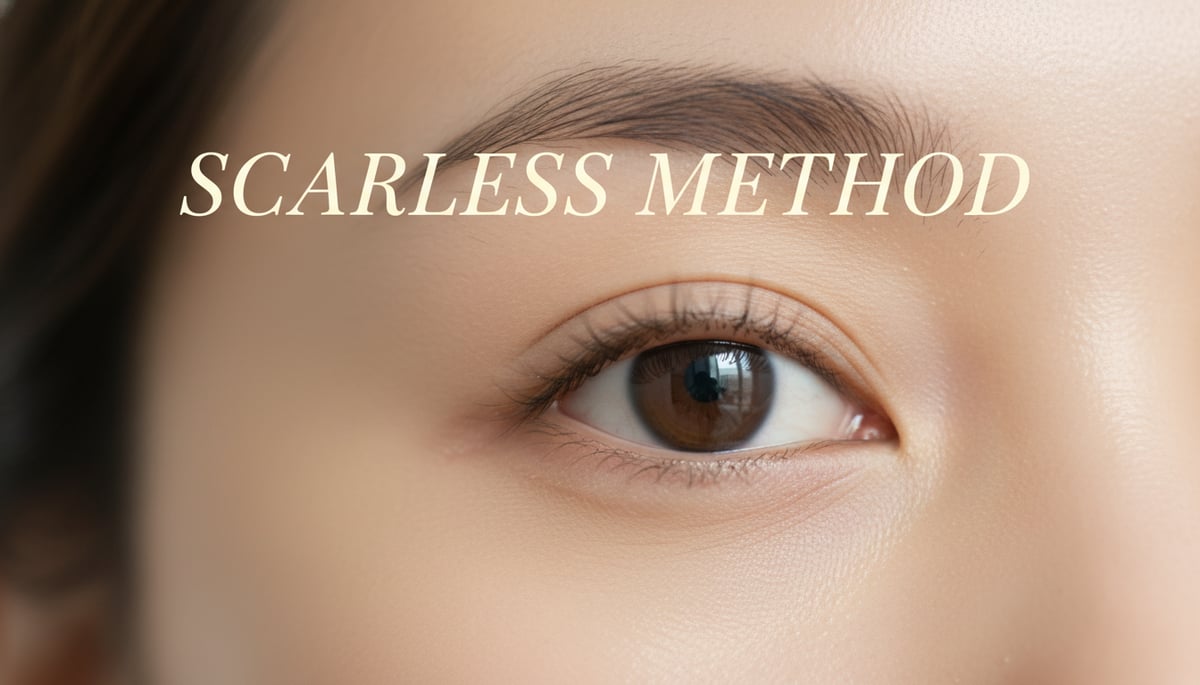
For those seeking a subtle enhancement without visible incisions, the suture method offers a compelling, minimally invasive option. This non-incisional technique creates a natural-looking crease by passing fine sutures through tiny punctures in the eyelid skin, forming an internal anchor for the fold.
This method is particularly ideal for patients with thin eyelid skin that lacks significant excess fat or skin. It's a "less is more" approach that works best for a select group of candidates; as noted in the Plastic Surgery Journal (2023), "Very few patients are ideal candidates for this approach alone," underscoring the need for a proper assessment.
Patients benefit from a swift procedure, typically under 30 minutes, and a short recovery of about one week with only mild bruising. A key advantage is the complete absence of a visible scar, contributing to a natural appearance.
However, the primary disadvantage is non-permanence. The sutures can loosen or tear over time, causing the fold to weaken or disappear (Aesthetic Surgery Review, 2022). Longevity is estimated at 5 to 10 years, though this can vary.
Note: This technique is not suitable for correcting droopy eyelids or removing substantial excess skin, as it cannot address structural tissue issues.
The suture method offers a minimally invasive, scarless enhancement with a swift recovery, making it an excellent choice for patients who prioritize subtlety over permanence.
The Partial Incision Technique: The Best of Both Worlds?
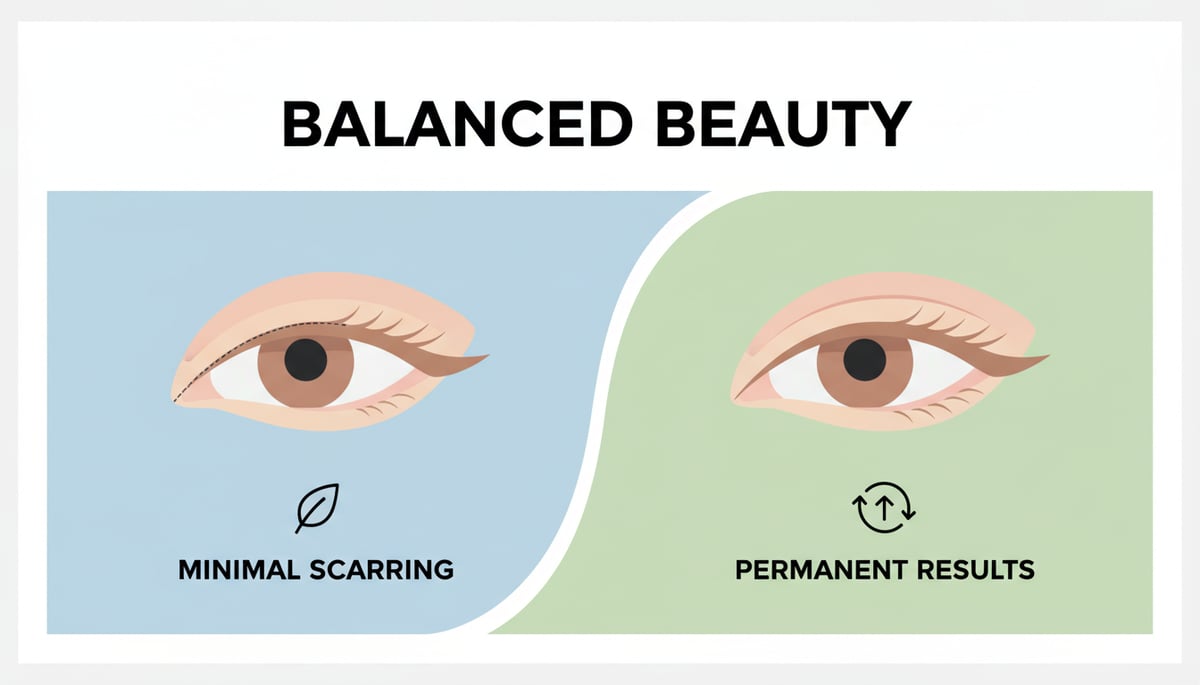
The partial incision technique offers a compelling middle ground, expertly combining the permanence of an incision with a gentler recovery. It's an excellent choice for achieving a natural-looking, lasting crease with minimized downtime.
This innovative method involves creating one to several very small incisions along the desired crease line, allowing for the targeted removal of excess fat without extensive skin removal. Surgeons often use three to five minute incisions to produce stable, natural-looking outcomes (Aesthetic Surgery Journal, 2023).
This technique is ideal for patients with puffy eyelids due to excess fat but without significant excess skin. It is also an effective way to correct issues from a previous suture technique, offering a more stable and permanent solution (Plastic Surgery Practice, 2022).
Patients appreciate this hybrid approach for its permanent results, similar to a full incision, but with significantly less scarring and swelling. Incisions under 5 millimeters can result in virtually undetectable marks. While recovery is quicker, the smaller surgical window makes it an intricate procedure requiring surgical expertise.
Note: The partial incision offers more stability and durability than the suture-only technique without the extensive recovery of a full incision.
The partial incision technique provides a balanced solution, achieving permanent results with minimal scarring for patients who do not require extensive skin removal.
Designing Your Look: Why Customization is Everything
Achieving a natural-looking double eyelid is not a "one-size-fits-all" process. A personalized approach is essential, crafting a crease that harmonizes with your unique facial structure, ethnic background, and aesthetic goals.
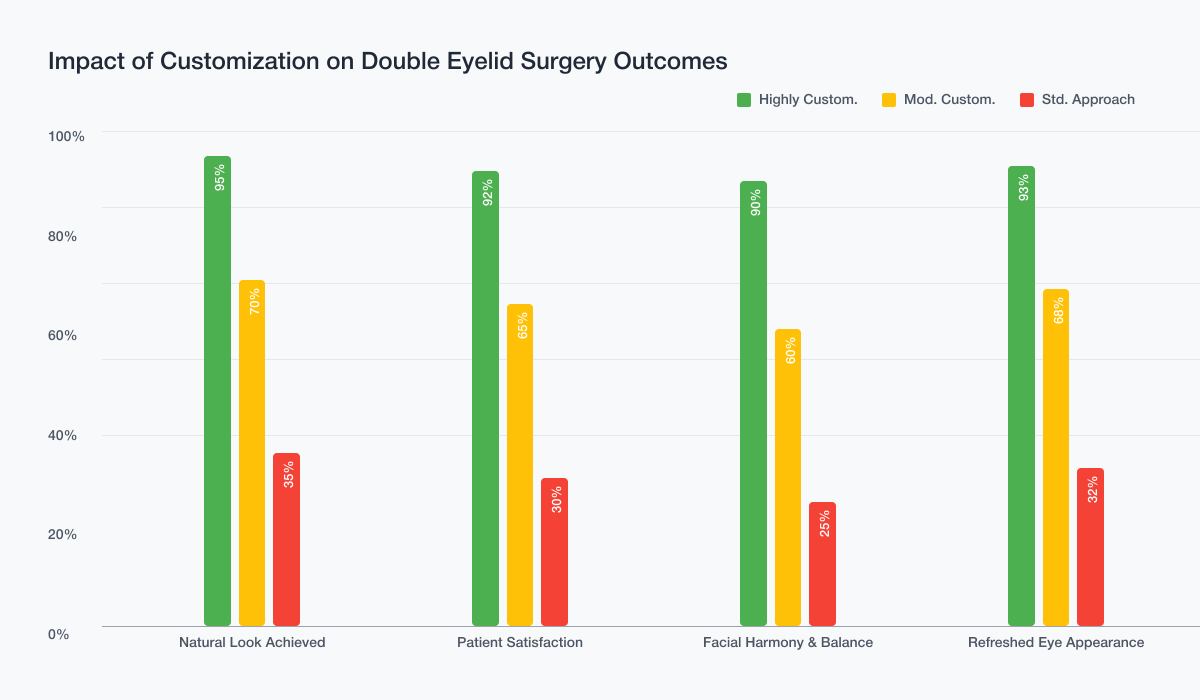
The artistry begins with a detailed consultation where your surgeon assesses key design elements like eyelid thickness, fat distribution, and bone structure. As Dr. Peter Lee emphasizes, balance and proportion with the rest of the face are key to creating a thoughtful, patient-centric plan.
Crease Height: A Personal Dimension
Crease height is a critical factor influenced by personal preference and ethnicity.
- North Eastern descent (China, Korea, Japan): Often prefer a 3-6 mm height for a subtle aesthetic.
- South Eastern descent (Thailand, Vietnam, Malaysia): Frequently opt for a 7-10 mm height for a more pronounced appearance.
Crease Shape: Tapered vs. Parallel
Beyond height, the crease shape profoundly impacts the final look.
| Crease Style | Description | Characteristic Look |
|---|---|---|
| Tapered | Starts subtly at the inner corner, gradually widening. | Often perceived as softer and more traditional. |
| Parallel | Maintains consistent height from inner to outer corner. | Creates a more defined, consistently open eye. |
Achieving Symmetry and Enhanced Features
Most faces have some natural asymmetry. The goal of surgery is not to create a perfect mirror image but to establish the appearance of symmetry. This ensures a balanced, natural aesthetic that enhances your features without looking artificial.
Note: For comprehensive results, additional procedures like epicanthoplasty can be considered. This modifies the inner eye corner to subtly lengthen the eye's horizontal width, creating an even more open and harmonious look.
The artistry of double eyelid surgery lies in meticulous, personalized design that harmonizes the new crease with the patient's overall facial anatomy.
Recovery and Long-Term Care: What to Expect After Surgery
Understanding the recovery timeline and committing to aftercare are crucial for optimizing your results. Your care team will guide you through each stage to ensure a smooth healing process.
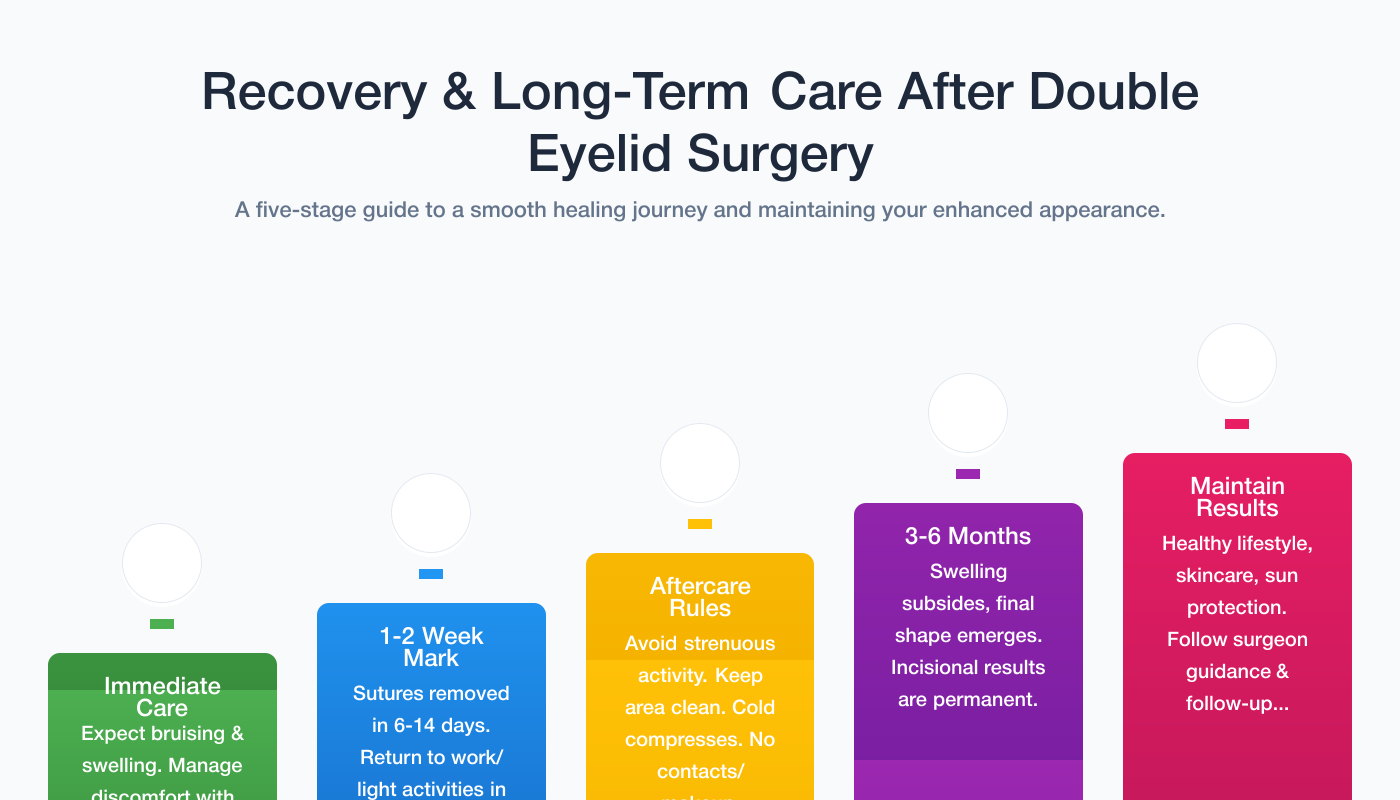
Immediately after surgery, expect some bruising and swelling. The initial recovery phase typically lasts one to two weeks for incisional methods and a quicker four to five days for suture techniques. Most patients find that extra-strength Tylenol is sufficient to manage any discomfort. Sutures, if used, are usually removed within 6 to 14 days post-surgery. Most individuals feel comfortable returning to work and light social activities within 7 to 10 days. The final, subtle contours will continue to settle over the following months.
Effective aftercare is paramount for optimal healing:
- Avoid Strenuous Activities: For at least a few weeks, refrain from heavy lifting or intense exercise.
- Maintain Cleanliness: Keep the surgical area clean as instructed to prevent infection.
- Manage Swelling: Apply cold compresses regularly during the first few days to reduce swelling.
- Eye Care: Avoid contact lenses for about one week and eye makeup for about three weeks to prevent irritation.
While initial improvements are visible quickly, significant swelling may persist for three to six months, with the final aesthetic shape appearing around this time. For incisional surgery, the results are considered permanent, though the natural aging process will continue. A healthy lifestyle, diligent skincare, and sun protection are key to maintaining your beautiful results long-term.
Note: Follow your surgeon's personalized aftercare guidance precisely. Regular follow-up appointments are essential for monitoring your healing and ensuring the best possible outcome.
Achieving enduring, natural-looking results hinges on diligent post-operative care and a clear understanding of the healing journey.
Frequently Asked Questions
Having clear, direct answers to your questions is key to feeling confident about your journey. Here, we address some of the most common concerns about double eyelid surgery.
How painful is the surgery?
Patients generally report minimal discomfort. The procedure is performed under local anesthesia, so you feel no pain during the surgery itself. Post-operative soreness is effectively managed with prescribed medication and cold compresses (Clinical Observations, 2023).
Will there be visible scars?
With the non-incisional (suture) method, there are no external scars. For incisional techniques, the fine scar is meticulously placed within the natural fold of the new eyelid, making it virtually undetectable once healed (Surgical Practice Consensus, 2024).
How long do the results last?
Longevity depends on the technique. Incisional and partial incision methods are generally considered permanent. The suture method typically lasts 5 to 10 years or longer, though a retightening may be considered over time if needed (Medical Literature Review, 2023).
What is the ideal age for the surgery?
This surgery is recommended for adults whose facial features are fully developed, typically 18 years or older. There is no upper age limit, provided you are in good general health. Many patients are in their early 20s, but it is a suitable option for various adult age groups (Dr. Kahana, 2023).
Will insurance cover the procedure?
As a cosmetic procedure, double eyelid surgery is generally not covered by insurance. However, if sagging eyelids significantly impair your vision—a condition known as ptosis—a portion of the costs may be eligible for partial coverage (Wave Plastic Surgery, 2024).
Note: Always consult with your insurance provider and surgeon to understand potential coverage options for functional components of eyelid surgery.
Addressing these common questions demystifies the surgical process and empowers patients to move forward with confidence.
Achieving natural-looking double eyelids is an art form, blending surgical precision with a deep understanding of individual beauty. The goal is always enhancement, not alteration, using customized techniques to create a result that complements your unique features and heritage.
Embracing this journey is a thoughtful decision. With the right knowledge and an expert surgeon, a refreshed, authentic appearance is entirely attainable.
The most crucial next step is a thorough consultation with an experienced, board-certified plastic surgeon specializing in Asian blepharoplasty. They can assess your facial anatomy, understand your aesthetic goals, and recommend the ideal technique to achieve a result that is both beautiful and uniquely you.
Tags
Related Articles

How to Choose the Right Plastic Surgeon in Korea: A Guide for International Patients

How to Choose the Right Plastic Surgeon in Korea: An International Patient’s Guide