
Beyond Price: What to Consider When Choosing a Surgeon
Read about Beyond Price: What to Consider When Choosing a Surgeon on Wonderful Plastic Surgery

When facing an elective surgical procedure, the natural inclination is to meticulously review a surgeon's qualifications and experience. Yet, surprising research reveals that for many patients, a surgeon's manner – their interpersonal skills and how they communicate – often outweighs even their extensive credentials.
Choosing the right surgeon is one of the most critical healthcare decisions you will ever make. This pivotal choice impacts your safety, comfort, and the ultimate success of your outcome, extending far beyond a simple price tag or just looking at credentials.
This guide empowers you with a comprehensive framework, exploring the crucial human, technical, and environmental factors that truly contribute to a positive surgical experience. By moving past traditional metrics, we'll help you confidently select the best possible care for your unique needs.
The Human Element: Why a Surgeon's Manner Is a Critical Metric
When contemplating surgery, it’s natural to feel a mix of hope and apprehension. While the surgical outcome is paramount, many patients instinctively evaluate a surgeon far beyond their technical prowess—they assess their manner. This intuition is not just valid; it's a critical component of successful treatment and patient well-being, directly impacting trust, informed consent, and your entire care journey.
Indeed, studies consistently show that a surgeon's interpersonal skills rank highly among patient priorities. A nationwide study involving 3,133 patients revealed the 'surgeon manner' domain was the top choice for patients selecting a surgeon, achieving a mean score of 4.58 out of 5 (Research Data, 2023). This highlights that how a surgeon interacts with you can be as important as their technical skill in shaping your experience.
Effective communication is far from a mere 'soft skill'; it forms the bedrock of patient safety and satisfaction. When a surgeon clearly explains procedures, potential risks, and recovery expectations in understandable language, you gain a comprehensive grasp of your situation. For instance, the statement 'The surgeon discusses issues in an understandable language' received a very high mean score of 4.59 out of 5 in the same patient study. This clarity is the cornerstone of truly informed consent, empowering you to make confident decisions about your health.
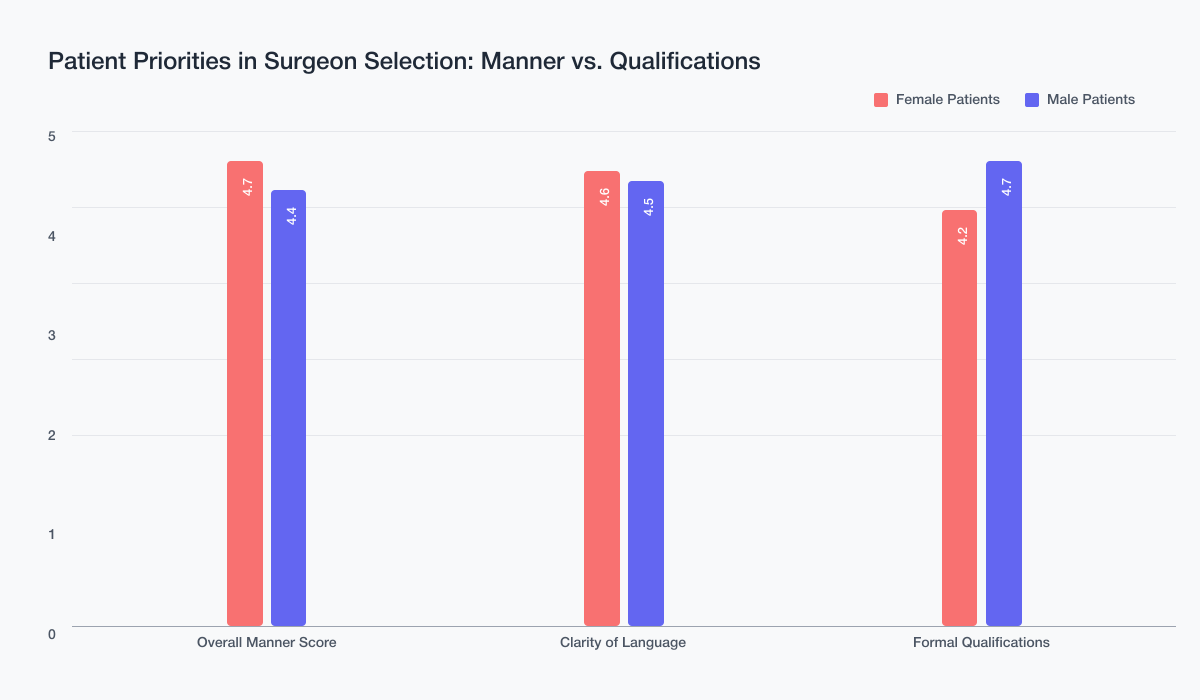
Interestingly, patient priorities can vary by gender. Research indicates that females tend to place a higher value on a surgeon’s manner, including empathy and communication, compared to males, who often prioritize formal qualifications (Research Data, 2023). This suggests a nuanced approach to selecting a surgeon may benefit everyone, recognizing different comfort points.
A surgeon who dedicates adequate time to patiently answer all your questions, translating complex medical jargon into plain English, builds invaluable trust. This shared understanding fosters a sense of security, allowing you to feel genuinely heard and respected. Even a surgeon’s 'gut feeling' about a patient's outcome has been shown to be a good predictor (Research Data, 2023), hinting at the subtle, yet powerful, connection between doctor and patient.
Note: Trust in your surgeon significantly reduces pre-operative anxiety and can positively influence recovery. It's about feeling truly seen and understood.
Ultimately, your surgeon’s ability to communicate effectively and demonstrate empathy creates an environment where you feel confident and supported, moving beyond medical precision to offer profound reassurance during a vulnerable time.
Decoding Qualifications: A Guide to a Surgeon's Expertise
When evaluating a surgeon, it’s easy to get sidetracked by impressive, yet ultimately less relevant, credentials. While a prestigious medical school or an academic position might sound appealing, their true value to your specific surgical outcome is often secondary to more practical metrics. To truly assess a surgeon's expertise, we need to focus on what matters most: their direct experience with procedures like yours.
Patients themselves underscore this perspective. The most preferred qualifications cited by patients are 'various experiences' (23.5%) and 'surgical ability' (18.3%), highlighting a strong desire for proven, hands-on expertise (Research Data, 2023). This indicates a clear preference for a surgeon with a robust track record in their craft, rather than just academic accolades.
Consider these key factors that genuinely reflect a surgeon's proficiency:
- Board Certification: This is a crucial benchmark. It signifies that a surgeon has undergone rigorous training and passed comprehensive examinations in a specific specialty, demonstrating a high level of competence and commitment to their field.
- Procedural Volume: How many times has your surgeon performed the exact procedure you need? A high volume often correlates with better outcomes and fewer complications. Think of it this way: practice makes perfect, especially in surgery.
- Specialization: Does the surgeon focus predominantly on procedures similar to yours? A specialist surgeon, dedicating their practice to a narrow field, often possesses deeper expertise than a generalist.
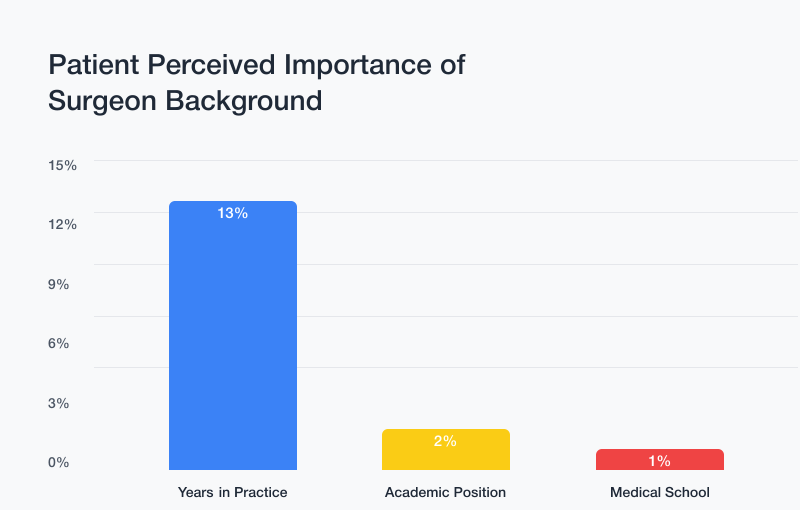
- Years in Practice: While not the sole determinant, a surgeon's 'number of years in practice' scored significantly higher (mean 4.43) in patient surveys compared to 'medical school attended' (mean 3.83) or 'academic position' (mean 3.88) (Research Data, 2023). This underscores the value of accumulated experience.
Note: Don't be swayed by superficial markers. Focus on how a surgeon's credentials directly relate to your specific medical needs.
Interestingly, demographic factors also play a role in what patients prioritize. Patients aged 35 and older, along with male patients, tend to place a higher value on formal qualifications and a surgeon's reputation (Research Data, 2023). This suggests that some patients may naturally gravitate towards these markers, making it even more important to understand which ones genuinely impact outcomes.
When researching a surgeon, look beyond their biography to actively seek information on their specific training in your procedure, their board certifications, and ideally, their procedural volume for that particular surgery, as this focused approach ensures you are choosing expertise truly relevant to your health goals.
The Surgeon's Calculus: Hidden Factors in Their Decision-Making
Choosing a surgeon often feels like an objective process, focused solely on credentials and success rates. Yet, a surgeon's recommendation is a nuanced decision, shaped by a complex interplay of personal and institutional factors far beyond published evidence. Understanding these hidden influences can empower you to ask more precise questions during your consultation.
Surgeons navigate five primary categories when formulating a treatment plan. These include the patient's specific medical condition, the available clinical information and evidence, the capabilities of their institution, unique patient-specific factors, and crucial surgeon-specific factors. This holistic approach ensures every aspect is considered for your care.
When there's no clear-cut, "Class 1" evidence (the highest standard of proof) for a particular surgical approach, surgeon-specific factors become highly influential. This includes their years of experience, their specific training background, and even their personal comfort level with a particular procedure. A qualitative study of 32 surgeons found that in the absence of Class 1 evidence, these surgeon factors are likely the most powerful influence on decision-making (Research Data). In fact, 30 out of 32 surgeons interviewed agreed their experience influenced their choices.

This variability explains why two highly qualified surgeons might recommend different approaches for the same condition. Each surgeon operates within their "in my hands" comfort zone, favoring techniques where they have extensive practice. For example, a single neurosurgery case vignette presented to nine neurosurgeons produced six different treatment approaches (Proof Anchor), highlighting this diverse perspective. Surgeons often acknowledge that their personal views about a disease and its treatment can sometimes influence or even trump prevailing methods (Proof Anchor).
Furthermore, the institutional context plays a significant role. Surgeons practicing in academic hospitals, with access to diverse specialists and cutting-edge technology, may approach cases differently than those in rural settings with limited resources or peer support. The environment shapes the options considered. The specific training received also has a "great impact" on the type of surgeon they become (Research Data).
Note: Understanding these influences isn't about questioning expertise, but about recognizing the human element in surgical decision-making. This knowledge helps you engage in a more informed dialogue with your surgeon.
Recognizing that a surgeon's recommendation is a complex blend of evidence, personal expertise, and environment empowers patients to ask critical questions about why a specific approach is being recommended over others, fostering a truly informed and collaborative decision-making process.
The Workshop and the Team: Evaluating the Surgical Environment
While a surgeon's individual skill is paramount, the broader surgical environment—the "workshop" and its "team"—is equally vital to a successful outcome. Patients often begin their search based on hospital characteristics like reputation and proximity (Research Data), but truly excellent care extends far beyond just these initial impressions.
A hospital's overall capabilities are crucial, especially for managing complex cases or unexpected complications. Key aspects include:
- Advanced ICU Availability: Essential for post-operative monitoring and recovery, particularly after major procedures.
- Specialist Consultations: Access to a broad range of specialists (e.g., cardiologists, pulmonologists) ensures comprehensive care for any co-existing conditions.
- Modern Equipment: State-of-the-art technology can enhance precision and safety during surgery.
As one systematic review noted, many patients prioritize hospital characteristics, with "The hospital has a good reputation among patients and doctors" receiving a high mean score of 4.39 (Research Data). Surgeons at academic centers often receive referrals because other hospitals lack the necessary surgical resources (Research Data), underscoring the importance of institutional support.
Beyond the facility, the surgical team's cohesion is a hidden gem. Research suggests that a surgeon's familiarity with their operating room (OR) team—including anesthesiologists, nurses, and technicians—can lead to fewer complications (Proof Anchor). This team familiarity creates a seamless workflow, reducing errors and enhancing patient safety.
Even external factors, often overlooked, can statistically impact surgical outcomes. Studies have shown warmer weather can correlate with more surgical site infections, and daytime surgeries often boast lower complication rates than those performed during off-hours (Research Data). These variables highlight that numerous elements contribute to surgical success beyond the surgeon's hands alone.
A skilled surgeon is only one component of a successful operation; the quality of the hospital, its resources, and the supporting team are equally vital to ensuring a safe procedure and optimal recovery.
Gathering Intelligence: A Practical Guide to Researching Your Surgeon

Embarking on the journey to choose a surgeon demands a robust research strategy. It's about moving beyond superficial assessments to compile a holistic, well-rounded picture of a surgeon's practice. Your starting point can significantly influence the quality of your decision.
The most reliable initial step is often a referral from a trusted primary care physician or specialist. These professionals have an insider's view of their peers' reputations and expertise. A systematic review identified physician referrals and word-of-mouth as primary drivers of provider choice (Proof Anchor), highlighting their enduring value.
Word-of-mouth recommendations from friends and family are powerful, offering personal anecdotes and reassurance. However, these experiences are highly subjective and should be balanced with objective research. What worked well for one person might not be the best fit for another. In one study, 85.5% of patients agreed that information from different sources (other surgeons, patients, social media) could help them choose (Research Data).
While over half of patients agree that researching surgeons online is important, the actual use of public performance reports and quality data remains surprisingly low (Proof Anchor). There’s often a gap between interest and action. It’s crucial to actively seek out and scrutinize these reports, which can offer objective insights into complication rates or patient outcomes.
A surgeon's social media presence can offer glimpses into their communication style or professional interests. However, a high follower count is not a proxy for surgical skill or patient safety. Patients rate a surgeon's social media popularity significantly lower than their reputation within the medical field or formal survey ratings (Proof Anchor). The factor 'Depending on the surgeon's popularity on social media platforms' received a relatively low mean score of 3.70 (Research Data).
When using online rating sites, look for consistent themes in patient feedback rather than focusing on outlier reviews. Are there recurring comments about communication style, office staff friendliness, or wait times? These consistent patterns can provide valuable insights into the overall patient experience.
Here’s a practical approach:
- Start with Professional Referrals: Ask your primary care doctor for recommendations and specific reasons for their choice.
- Verify Credentials: Check board certification, licensing, and any disciplinary actions through state medical boards.
- Review Quality Data: Look for publicly available performance reports on hospital or surgeon-specific outcomes, if accessible.
- Evaluate Online Reviews: Scan multiple platforms for consistent feedback on patient experience and communication.
- Consider Social Media (Cautiously): Use it to assess communication style, not surgical prowess.
- Prepare for Consultation: List specific questions about experience with your condition, recommended procedure, and potential risks.
A robust research strategy triangulates information from professional referrals, vetted online data, and personal consultations to form a holistic picture of a surgeon's practice and suitability for your specific needs.
Choosing a surgeon for an elective procedure is undeniably a significant decision, one that extends far beyond the initial consultation and profoundly impacts your long-term well-being and confidence. This guide has aimed to provide you with a comprehensive framework, empowering you to make a choice rooted in deep understanding, not just surface-level metrics.
Here are the key takeaways to guide your journey:
- Prioritize the Human Element: A surgeon's communication skills, empathy, and ability to make you feel heard are as vital as their technical prowess, profoundly impacting your comfort and recovery journey.
- Look Beyond Basic Credentials: True expertise encompasses a deep understanding of complex scenarios, meticulous decision-making, and a continuous commitment to safety and ethical practice.
- Evaluate the Entire Surgical Ecosystem: The quality of the hospital, the support team, and the overall environment are crucial components that directly influence the safety and success of your procedure.
Making an informed choice requires thorough research and thoughtful consideration of both the tangible and intangible aspects of care. Trust your instincts, but empower them with comprehensive knowledge to ensure true peace of mind.
As you take the next step, focus on institutions and medical professionals who embody transparency, prioritize patient safety, and offer a genuinely patient-centric approach. Seek out initial consultations that allow you to openly discuss your concerns, assess their communication style, and understand the full scope of their proposed care plan, including the team and facilities. Remember, the goal is not just a successful procedure, but a positive, reassuring experience from beginning to end, guiding you confidently towards your desired outcome.
Tags
Related Articles

How to Choose the Right Plastic Surgeon in Korea: A Guide for International Patients

Online Consult Savings: The Shocking Truth About Korean Plastic Surgery