
A Patient's Guide to Plastic Surgery: Why Board Certification Matters
Read about A Patient's Guide to Plastic Surgery: Why Board Certification Matters on Wonderful Plastic Surgery

Embarking on a plastic surgery journey is a significant decision. While a medical license is a fundamental requirement for any doctor, the specialty of plastic surgery demands a level of expertise and dedicated training that extends far beyond basic licensure. The distinction between a licensed physician and a board-certified plastic surgeon is critical for your safety, your results, and your peace of mind.
This guide explains why choosing a board-certified plastic surgeon is the gold standard for patient safety, ethical practice, and optimal aesthetic outcomes. We will decode the credentials, outline the rigorous path to earning this designation, and explain the importance of career-long learning through Continuous Certification (CC). We will also provide a clear checklist for verifying a surgeon's status. Understanding and verifying board certification is the single most important step you can take to ensure your plastic surgeon is qualified, skilled, and committed to your safety.
TL;DR
Considering plastic surgery? The credentials that follow a surgeon's name are the most reliable indicator of their qualifications and commitment to your safety.
Board certification is a voluntary, advanced credential demonstrating a surgeon has exceeded basic medical licensing standards. This involves years of specialized residency training, passing rigorous written and oral exams, and committing to ongoing education through Continuous Certification (CC). The American Board of Medical Specialties (ABMS) recognizes this process as the gold standard in physician certification.
Always verify a surgeon’s credentials on the official American Board of Plastic Surgery (ABPS) website or through the ABMS Certification Matters tool.
Decoding the Credentials: What Is Board Certification in Plastic Surgery?
When researching surgeons, you will encounter many titles and acronyms. Understanding the crucial difference between a medical license and board certification is essential for making an informed decision for your care.
A medical license is the baseline requirement granting a doctor the legal right to practice medicine. Board certification, however, is a voluntary and significantly higher standard. It signifies that a surgeon has dedicated years to mastering the specific field of plastic surgery and has formally proven their expertise through a demanding, multi-stage evaluation process. The mission of the American Board of Plastic Surgery (ABPS) is to promote safe, ethical, and efficacious plastic surgery by maintaining these high standards for its diplomats.
| Feature | Medical License | Board Certification |
|---|---|---|
| Purpose | Grants legal authority to practice medicine. | Signifies advanced expertise in a specialty. |
| Issuing Body | State medical board. | Specialty-specific board (e.g., ABPS). |
| Requirements | Medical school degree, general exam (USMLE). | Accredited residency, rigorous written & oral exams. |
| Scope | General medicine. | Specific field (e.g., Plastic Surgery). |
Board certification is not merely a credential but a definitive mark of a plastic surgeon's extensive training, proven expertise, and dedication to the specialty. This commitment ensures they adhere to the highest standards of patient care and safety.
The Rigorous Path to Becoming a Board-Certified Plastic Surgeon
Earning board certification in plastic surgery is not a simple test or a weekend course. It is a marathon of education, training, and meticulous evaluation that spans more than a decade, designed to produce surgeons with exceptional skill and judgment.

This comprehensive journey ensures that a surgeon possesses the deep knowledge and refined techniques necessary for this complex specialty. The path is intentionally demanding to protect patient safety and uphold the integrity of the profession. According to the ABPS Examination Process guidelines, this path requires the successful completion of multiple stages of hands-on surgical training and assessment before a surgeon can sit for the final examinations.
The journey to certification includes these key milestones:
- Foundational Education: A candidate must first complete a four-year undergraduate degree and then four years of medical school to earn an M.D. or D.O. degree.
- Surgical Residency: Following medical school, the surgeon must complete a minimum of six years of accredited surgical training. This is typically done through an Integrated program (six years dedicated to plastic surgery) or an Independent program (a full residency in general surgery or another specialty, followed by three years of plastic surgery residency).
- Written Examination: Candidates must pass a comprehensive, all-day written examination that tests the full spectrum of plastic surgery knowledge, from aesthetic procedures to complex reconstructive surgery.
- Oral Examination: The final step is a standardized oral examination where candidates are evaluated by teams of expert, senior board-certified surgeons on their clinical judgment, ethical decision-making, and ability to safely handle diverse surgical scenarios.
Throughout this process, candidates must also maintain an unrestricted medical license and active hospital privileges. The extensive and multi-faceted requirements for board certification ensure that only surgeons with proven surgical competence and sound clinical judgment earn this elite credential.
A Career of Learning: The Continuous Certification (CC) Process
Earning board certification in plastic surgery is not the finish line; it is the beginning of a lifelong professional commitment. This ongoing dedication is formalized through the Continuous Certification (CC) program, a structured process ensuring that a surgeon’s skills and knowledge remain at the forefront of the medical field. This system transforms certification from a single achievement into a dynamic, career-long pursuit of excellence.
The American Board of Plastic Surgery (ABPS) requires its certified surgeons, known as diplomates, to actively participate in this program. According to the ABPS Continuous Certification Program Booklet (2025), this process involves a cycle of requirements designed to validate a surgeon's expertise, professionalism, and commitment to patient safety on an ongoing basis. Diplomates must consistently demonstrate they are keeping pace with the latest advancements and adhering to the highest standards of care.
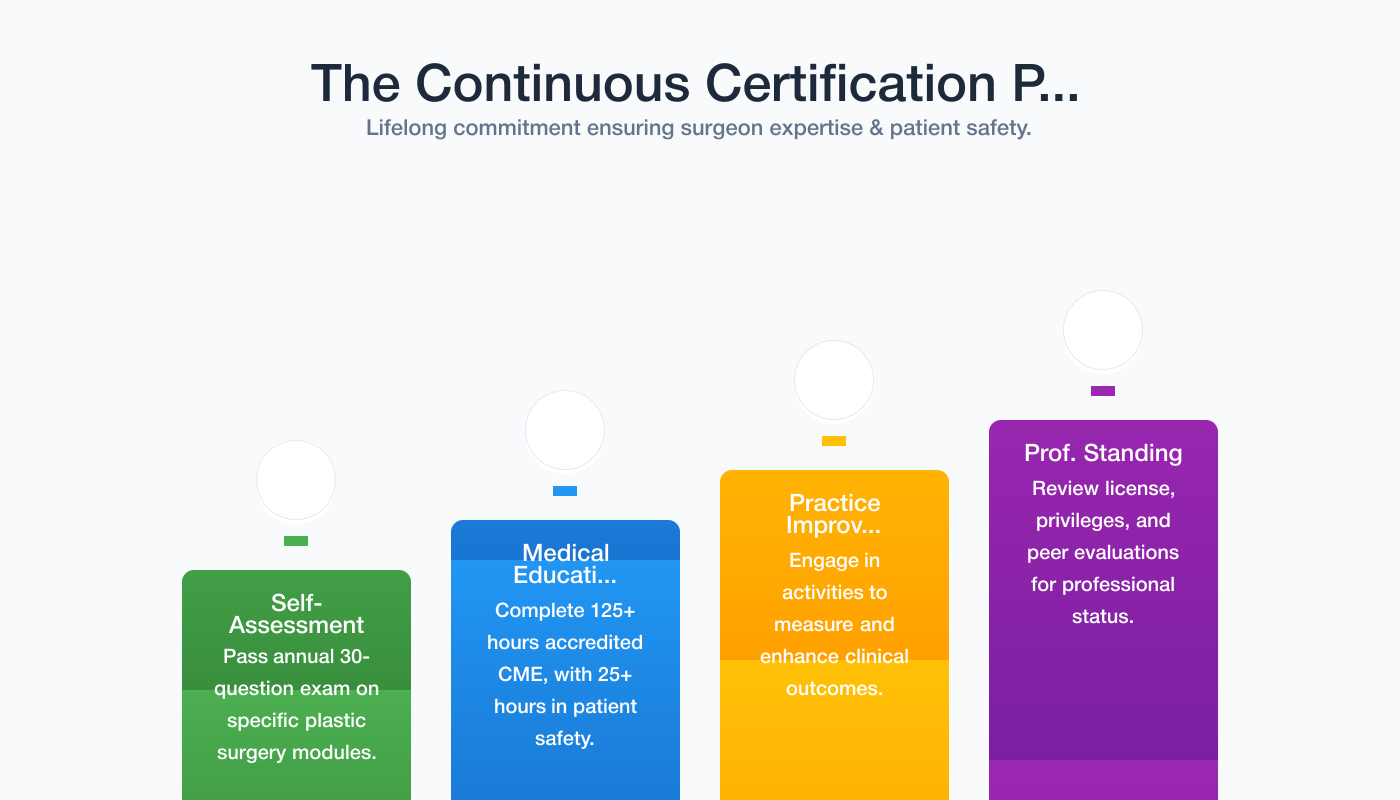
The Continuous Certification process includes several key components that must be completed over a 5- or 10-year cycle:
- Annual Self-Assessment: Each year, surgeons must pass a 30-question online examination focused on a specific module of plastic surgery to test their current knowledge on recent developments and best practices.
- Continuing Medical Education (CME): Surgeons are required to complete a minimum of 125 hours of accredited medical education, with at least 25 of these hours dedicated specifically to patient safety topics.
- Practice Improvement Activities: Diplomates must engage in activities that measure and improve their clinical outcomes, such as tracking results for a specific procedure and comparing them to national benchmarks.
- Professional Standing Update: Towards the end of their cycle, surgeons undergo a comprehensive review of their professional standing, including verification of their medical license, hospital privileges, and confidential peer evaluations.
This rigorous, multi-faceted process ensures that a board-certified plastic surgeon is not only highly trained but also actively engaged in lifelong learning and practice improvement.
Your Pre-Consultation Checklist: How to Verify a Surgeon's Certification
While a surgeon’s website and office may display impressive credentials, it is a crucial step for every patient to verify this information independently. Taking a few moments to check a surgeon's status with an official source provides an essential layer of assurance and confidence.
The most direct way to confirm a surgeon's standing is through the official certifying boards. The American Board of Plastic Surgery (ABPS) provides a public verification tool on its website, which serves as the primary source for confirming certification specifically in plastic surgery. Similarly, the American Board of Medical Specialties (ABMS) offers its "Certification Matters" website, a reliable resource that allows you to verify a physician’s board certification status across 24 different medical specialties. These databases provide up-to-date, unbiased information directly from the source.
When you use these tools, you can see not just whether a surgeon is certified, but also their certification history and current status. It is important to note that certification by the American Board of Plastic Surgery is distinct from certifications offered by other boards. For procedures of the face, breast, and body, confirming certification by the ABPS is the gold standard.
Empowering yourself with this knowledge is a simple yet powerful step in ensuring you are placing your care in the hands of a qualified, vetted professional.
Making the Right Choice: Prioritizing Certification for Peace of Mind
When considering a cosmetic procedure, your health and safety are the most important factors in your decision. Choosing a surgeon who is board-certified by the American Board of Plastic Surgery is the most reliable way to prioritize your well-being.
This certification is more than a title; it is a clear and trusted indicator of a surgeon's extensive training, specialized expertise, and proven competence in the full scope of plastic surgery. It confirms that the surgeon has met stringent requirements for education and examination and is committed to upholding the highest ethical standards and engaging in continuous professional development. This commitment provides an invaluable layer of assurance that your surgeon is dedicated to excellence and patient safety.
By making board certification a non-negotiable requirement in your search, you are making an informed decision that aligns with the highest standards of medical care. This choice is the foundation for a safe, supportive, and successful surgical experience.
Ultimately, selecting a board-certified plastic surgeon is the most meaningful decision you can make for your safety, your results, and your peace of mind.
In your pursuit of aesthetic goals, choosing the right plastic surgeon is the most crucial decision you will make. This guide has illuminated the importance of national board certification as the definitive mark of excellence and commitment to patient safety in plastic surgery. It is not merely a credential; it is a promise of expertise, ethical practice, and dedication to your well-being.
To recap the vital insights from our discussion:
- Beyond Licensure: Board certification signifies a surgeon's voluntary commitment to exceeding basic medical licensure requirements, demonstrating specialized knowledge and advanced skills in plastic surgery.
- Rigorous Standards: Achieving this status involves extensive, accredited surgical training, mastery of complex techniques, and passing challenging written and oral examinations.
- Ongoing Excellence: Board-certified surgeons are dedicated to continuous education through Continuous Certification (CC), ensuring they remain at the forefront of surgical innovation and safety protocols.
- Empowerment Through Verification: Always utilize official resources like the American Board of Plastic Surgery (ABPS) or American Board of Medical Specialties (ABMS) to verify a surgeon's credentials.
Prioritizing a board-certified plastic surgeon means you are actively choosing unparalleled skill, integrity, and a steadfast focus on your safety and desired results. As you consider your options, take the pragmatic next step: empower yourself by verifying any potential surgeon's board certification. Schedule a comprehensive consultation, ask insightful questions, and seek a clear understanding of their qualifications. This informed, patient-centric approach is your foundation for achieving the outcomes you envision.
Tags
Related Articles

How to Choose the Right Plastic Surgeon in Korea: A Guide for International Patients

How to Choose the Right Plastic Surgeon in Korea: An International Patient’s Guide